Understanding the Problem
Before designing Hudai, I conducted a competitive analysis of leading Islamic apps to understand how people use them in their daily lives and where existing experiences fall short. The research revealed several recurring usability issues.
Cluttered Experiences
Many apps prioritize advertisements, promotional content, and secondary features, making common tasks slower and more distracting.
Limited Language Support
Many Islamic apps offer limited localization, creating barriers for a global audience with different languages and reading directions.
Busy Interfaces
Heavy layouts, dense typography, and strong visual elements reduce reading comfort and make the overall experience feel overwhelming.
Premium Restrictions
Essential features such as Quran translations, audio recitation, or Adhkar tracking are often available only through paid subscriptions.
Benchmark Analysis
The benchmark study focused on identifying usability patterns across popular Islamic applications. The findings helped define a product focused on simplicity instead of feature overload.
The research evaluated:
- Navigation simplicity
- Quran reading experience
- Prayer Times accessibility
- Adhkar interaction
- Language support
- Typography and readability
- Visual hierarchy
- Accessibility
- Monetization approach
Designing Around Everyday Use
Rather than adding more features, the goal was to simplify the experience and make essential daily activities faster and more comfortable.
Focus on Essential Activities
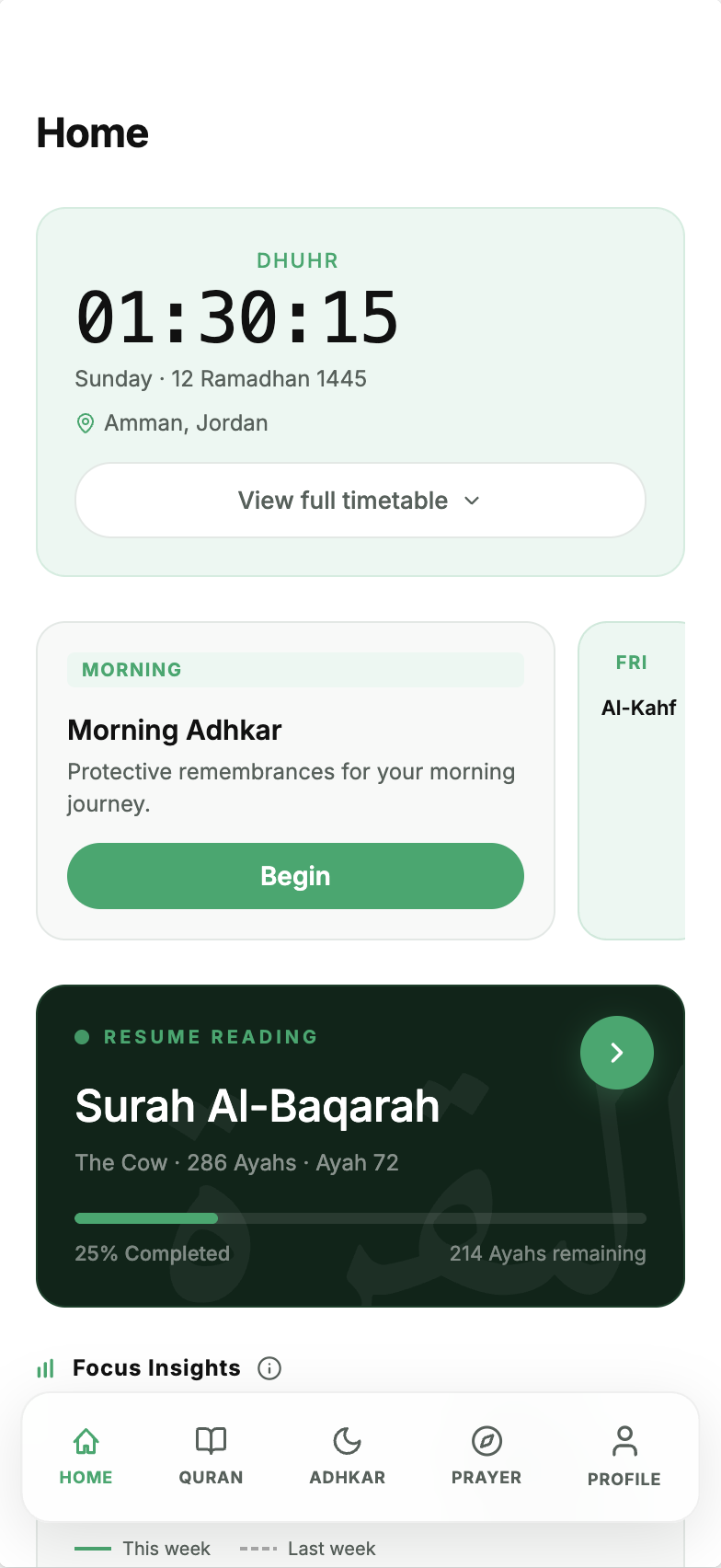
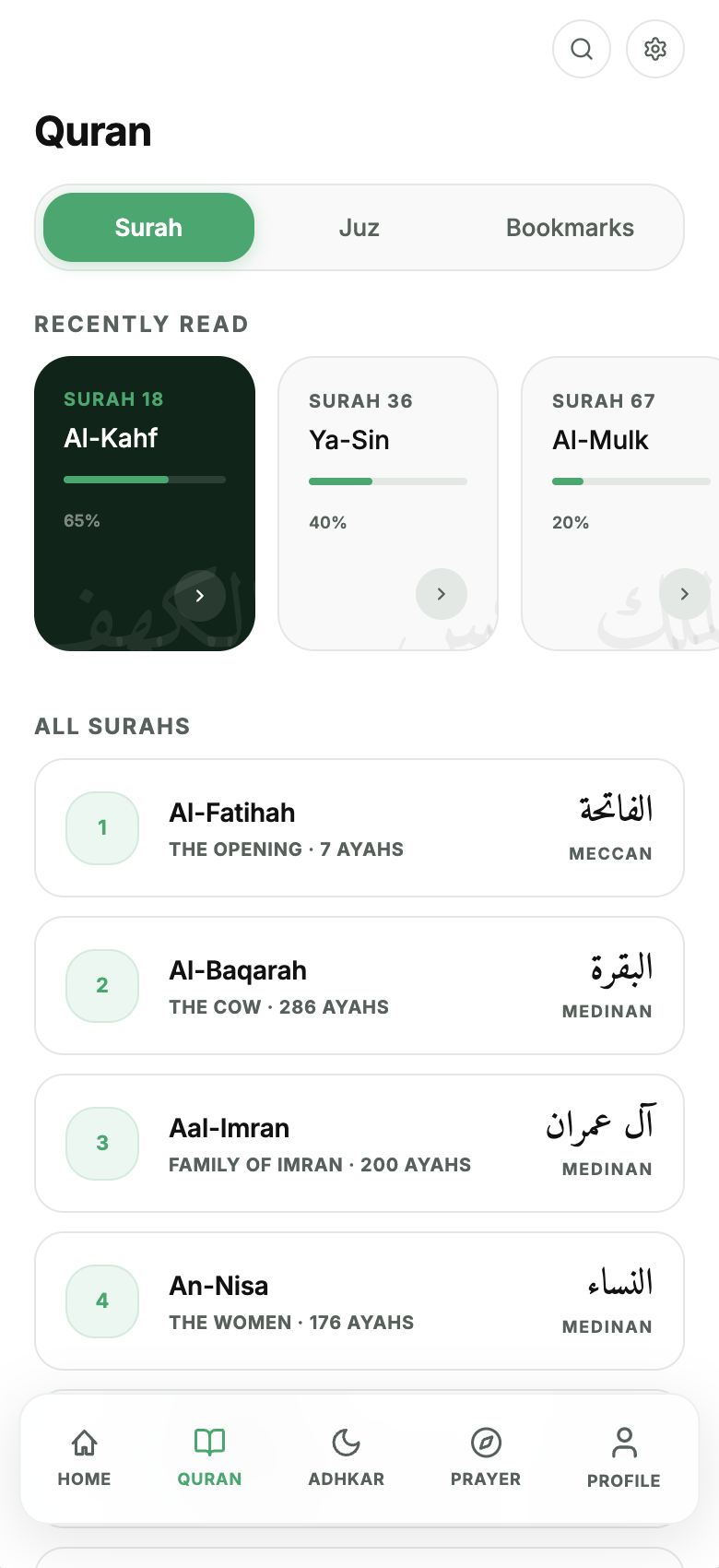
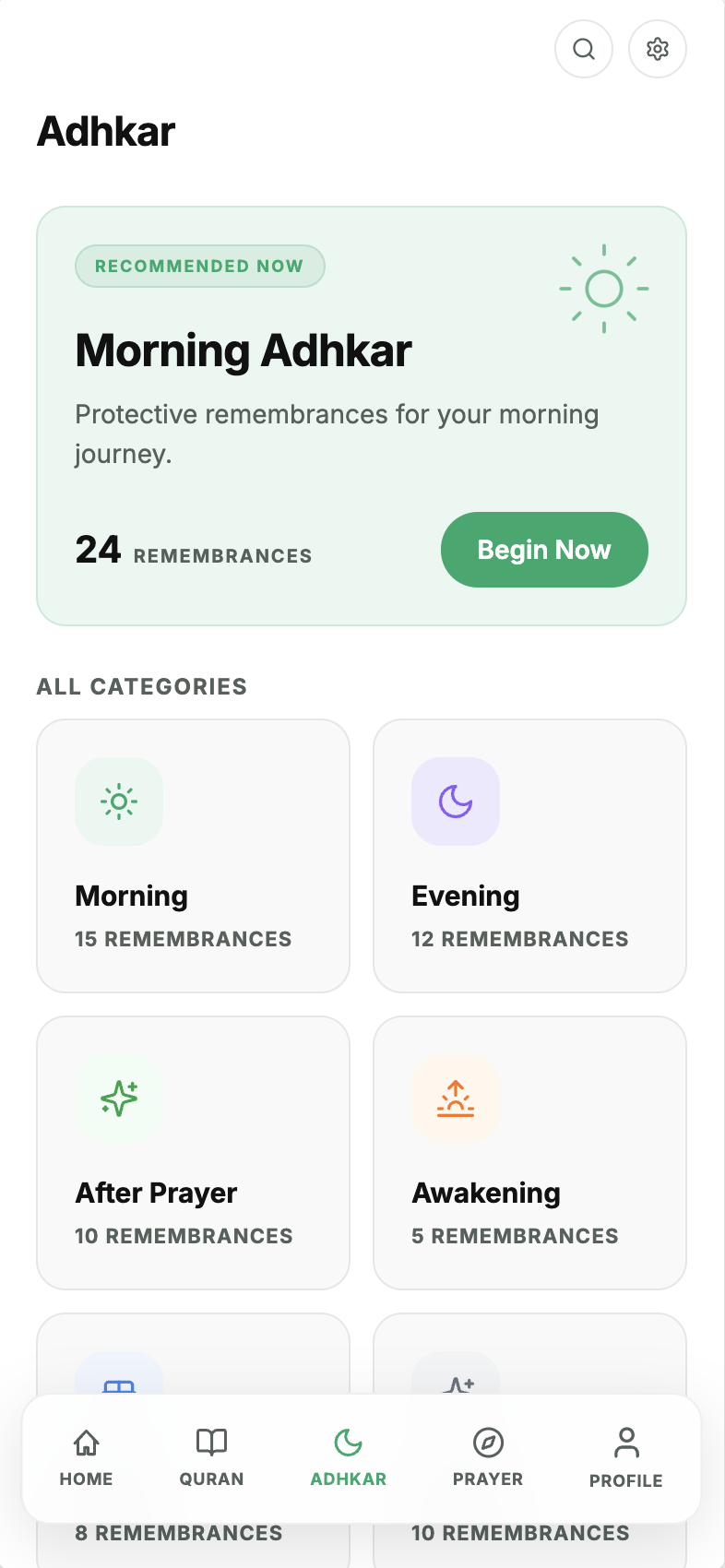
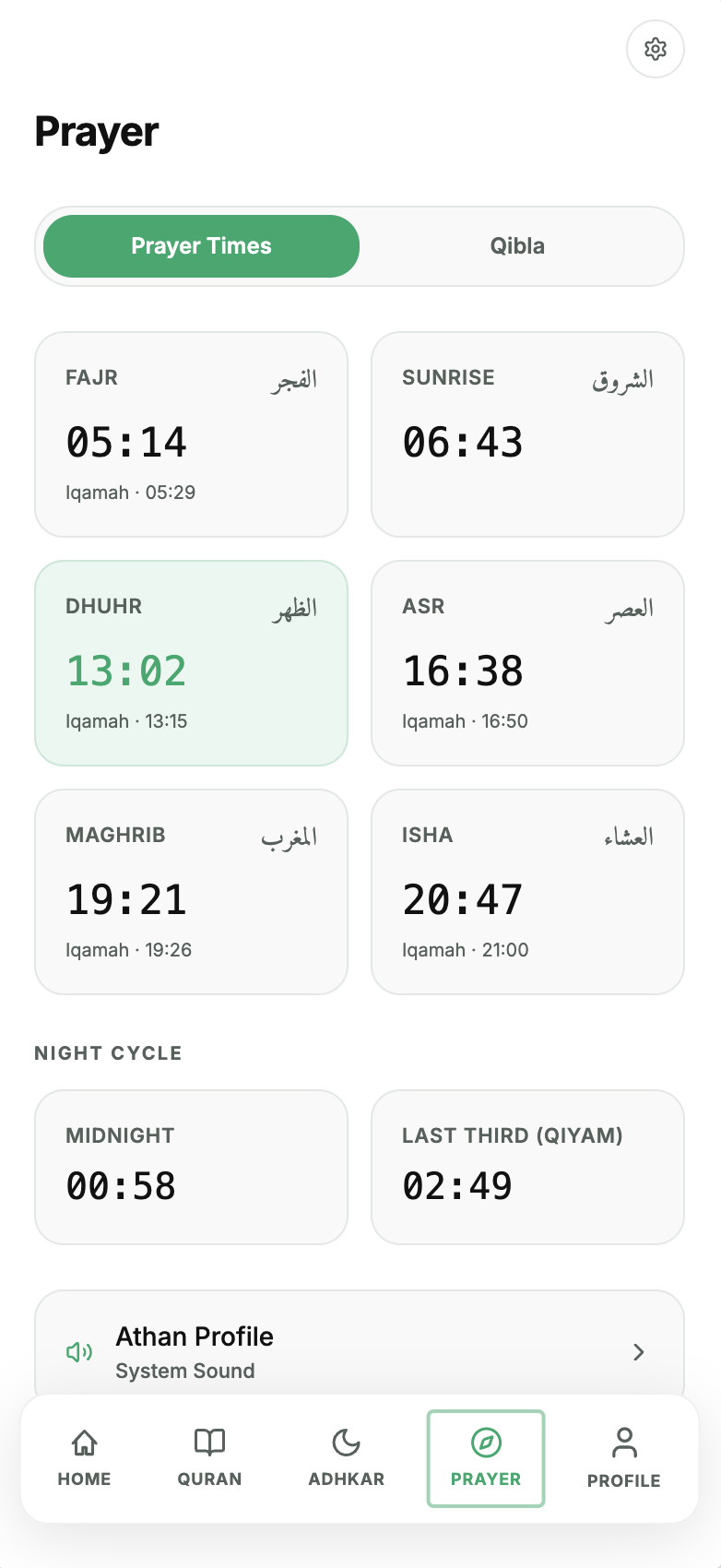
The experience prioritizes three core journeys: Prayer Times, Quran Reading, and Daily Adhkar. Everything else supports these primary tasks.
Calm Visual Language
A clean interface, balanced spacing, soft colors, and readable typography create an environment that keeps attention on the content instead of the interface.
Inclusive by Design
The interface was designed to support multiple languages while maintaining a consistent experience across both RTL (Right-to-Left) and LTR layouts.
Prototype Validation
Interactive Figma prototypes were tested with users from different backgrounds to evaluate navigation, readability, and overall usability. The feedback led to several design improvements.
Simplified Navigation
The original dashboard contained too many entry points. The navigation was simplified into four primary tabs, making everyday tasks easier to find.
Reading Preferences
Users requested greater control over reading. Text size, translation visibility, and reading preferences were added to improve accessibility.
Adhkar Interaction
Users wanted an easier way to track repetitions. A simple counter with optional haptic feedback reduced interaction while helping users stay focused.
A Calm and Focused Experience
The final interface was designed to reduce distractions and help users complete their daily Islamic activities with minimal effort.
Distraction-Free Reading
The Quran and Adhkar experiences remove unnecessary interface elements to improve concentration.
Clear Information Hierarchy
Typography, spacing, and contrast guide users naturally through the content while maintaining excellent readability.
Dark & Light Themes
Both themes provide a comfortable reading experience across different environments and lighting conditions.
Accessible Across Languages
Layouts, typography, and navigation adapt naturally to multiple languages while preserving consistency throughout the app.
Inclusive Design
The final interface was designed to reduce distractions and help users complete their daily Islamic activities with minimal effort.
Outcomes
The design decisions were validated through usability testing and user feedback.
Task Success Rate
Participants successfully completed common tasks such as finding a Surah, checking Prayer Times, and accessing daily Adhkar.
Free Core Experience
All essential features remain available without advertisements or premium restrictions.
Languages Supported
The experience supports multiple languages while maintaining a consistent interface across RTL and LTR layouts.
User Feedback
Participants consistently described the experience as simple, calm, and easy to navigate, highlighting the readability and distraction-free interface as key strengths.
Key Contributions
As UX Lead and Founder, I was responsible for:
- Product vision and feature prioritization
- Competitive analysis and UX research
- User flows and information architecture
- Wireframes and high-fidelity UI design
- Design system creation
- Interactive prototyping
- Usability testing and design iterations
- Multilingual and RTL experience design